How to Play Krillion: Rules, Timer and Answer Sets
The daily dive in plain English: seven prompts, 25 seconds each, which answers count, and why your pick is sometimes not in the list.
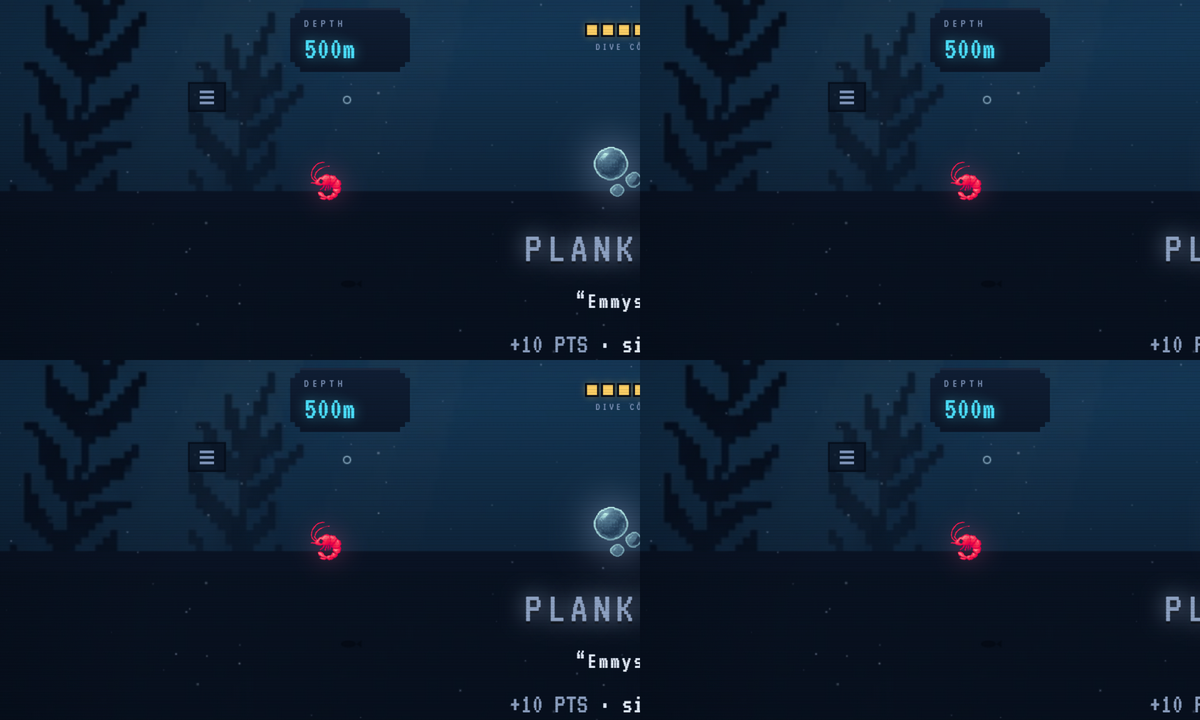
Open krillion.io and start the daily dive. There are seven prompts waiting, you answer them one at a time, and the game scores each answer as you go, moving you down the depth scale. Everyone gets the same seven prompts on the same day, so your score is comparable to everyone else's — that is the whole point of the format.
There is nothing to install. It runs in the browser, and it works the same on a phone as on a desktop.
The one rule that changes everything
Every other daily puzzle asks you to find the intended answer. Krillion inverts it: the obvious answer is worth almost nothing, and a rarer answer is worth more. You are not being tested on whether you know the fact. You are being tested on whether you know a fact that other people do not reach for.
That means your first instinct is usually your worst answer. It also means a prompt you know nothing about is not automatically a loss — a narrow, specific guess can beat a safe, general one.
The clock
Each prompt comes with a 25-second clock. Twenty-five seconds is short. It is long enough to type a two-word answer, and too short to talk yourself out of your first idea — which is exactly the tension the game is built around.
The practical consequence: you need a habit, not a research session. Decide in the first few seconds what your obvious answer would be, then spend the rest of the clock reaching for one level deeper. If you are still deciding between two answers when the clock runs out, you have already lost the round.
How an answer gets judged
The game does not compare your answer against a single correct answer. It checks it against an answer set — a list the developer builds by aggregating dictionaries, wiki pages, encyclopedias and whatever sources a particular prompt calls for, then merging and cleaning the result into one list.
Rarity then gets decided in one of two ways, depending on the prompt. Some prompts can be scored mechanically against a familiarity database: how often a word or a name actually turns up in what people read and write. For those, a common word simply cannot score deep, no matter how it is spelled. Other prompts cannot be reduced to a number like that, and those get a combination of language-model assistance and a manual pass.
When your answer is not in the list
The official FAQ addresses this directly, and the answer is refreshingly honest: if a fair answer was not listed, it usually means the developer missed a source. The answer set is built from data, and data has holes.
The useful part is what that means for you. A rejected answer is not a verdict on whether you were right. It is a verdict on whether that answer was in the set. There is nothing to fix on your end.
Spelling, aliases and the trap they set
You do not need perfect spelling. Some prompts accept thousands of answers, and many of those carry aliases because people use different names for the same thing. Autocorrect checks the aliases as well, so being a letter or two off can still land.
But that cuts both ways. The official example: the fish Threebanded Sheephead has "sea donkey" as an alias, and that is one letter away from "sea monkey" — an entirely different animal. Autocorrect is generous enough that a near miss can resolve to an answer you never meant. You will still be scored; it will just be the wrong creature.
After the seven are done
A daily dive ends when the seven prompts do. From there the site offers a few ways to keep going: the archive of past dives at krillion.io/archive, an endless mode at krillion.io/unlimited/classic, themed packs, and Puffer Party, a multiplayer round built around passing a timed fuse between players.
If you want the scoring logic in more detail — how rarity is actually decided, and why the too-clever pick fails — read how scoring works. For the practical side, rare answer strategy is the next page.
Common questions
How long do I have per prompt?
Each prompt gets a 25-second clock, and there are seven prompts in a dive. The clock is the main constraint — it is designed so you do not have time to talk yourself out of your first idea.
Can I play past dives?
Yes. The archive at krillion.io/archive keeps past dives, which is useful for practising the rarity instinct on prompts you have already seen discussed.
My answer was not accepted. Was it wrong?
Usually it means the answer set missed a source. The developer says a fair answer is missing when a source was not included in the aggregation, not because you were wrong.
Do I need to download an app?
No download is needed — Krillion runs in the browser on desktop and mobile. The developer's FAQ says an app is planned eventually, but there is no app to install today.
Is there a way to keep playing after the daily dive?
The endless mode at krillion.io/unlimited/classic lets you keep diving after the daily seven. It uses the same rarity logic, so it is the best place to practise without burning your daily attempt.